


Descubra iluminação exterior. Luminárias de parede e de jardim resistentes às intempéries com estilo atemporal.
Pontos-chave do projeto de iluminação em corredores
Nov 01,2025 | elegaLight
Hallway Lighting Should Consider Nighttime Visibility
O aspecto mais importante da iluminação de corredores é a segurança durante o movimento noturno.
Além de fornecer brilho básico, a iluminação do corredor também deve servir à função de iluminação suave à noite, iluminando as paredes e o chão sem criar ofuscamento.
Uma iluminação bem projetada permite que as pessoas vejam claramente o final do corredor e caminhem com segurança, mesmo tarde da noite. Também deve garantir que os usuários possam se mover para o banheiro ou outras áreas sem ansiedade ou perder a noção de direção.
Key Points in Hallway Lighting Design
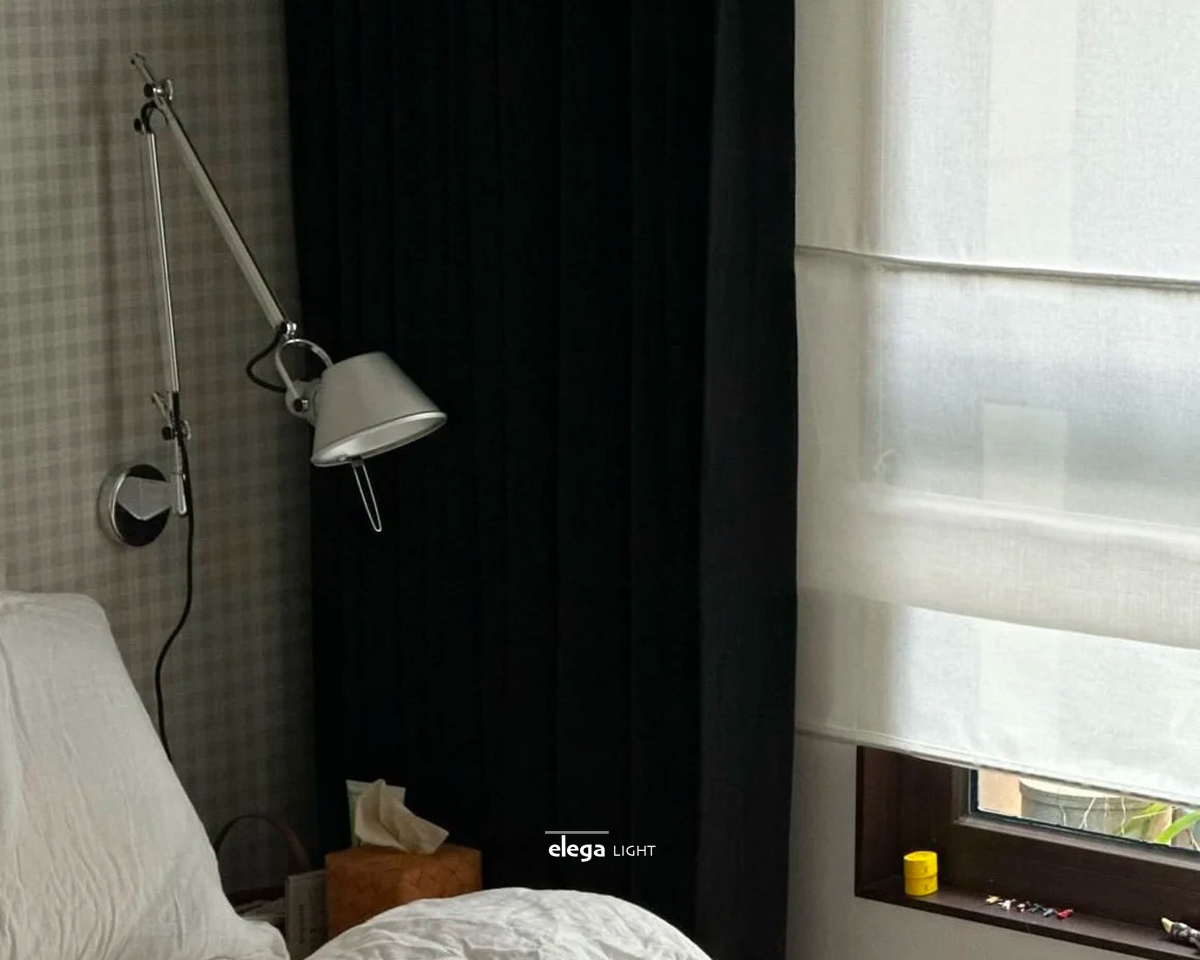
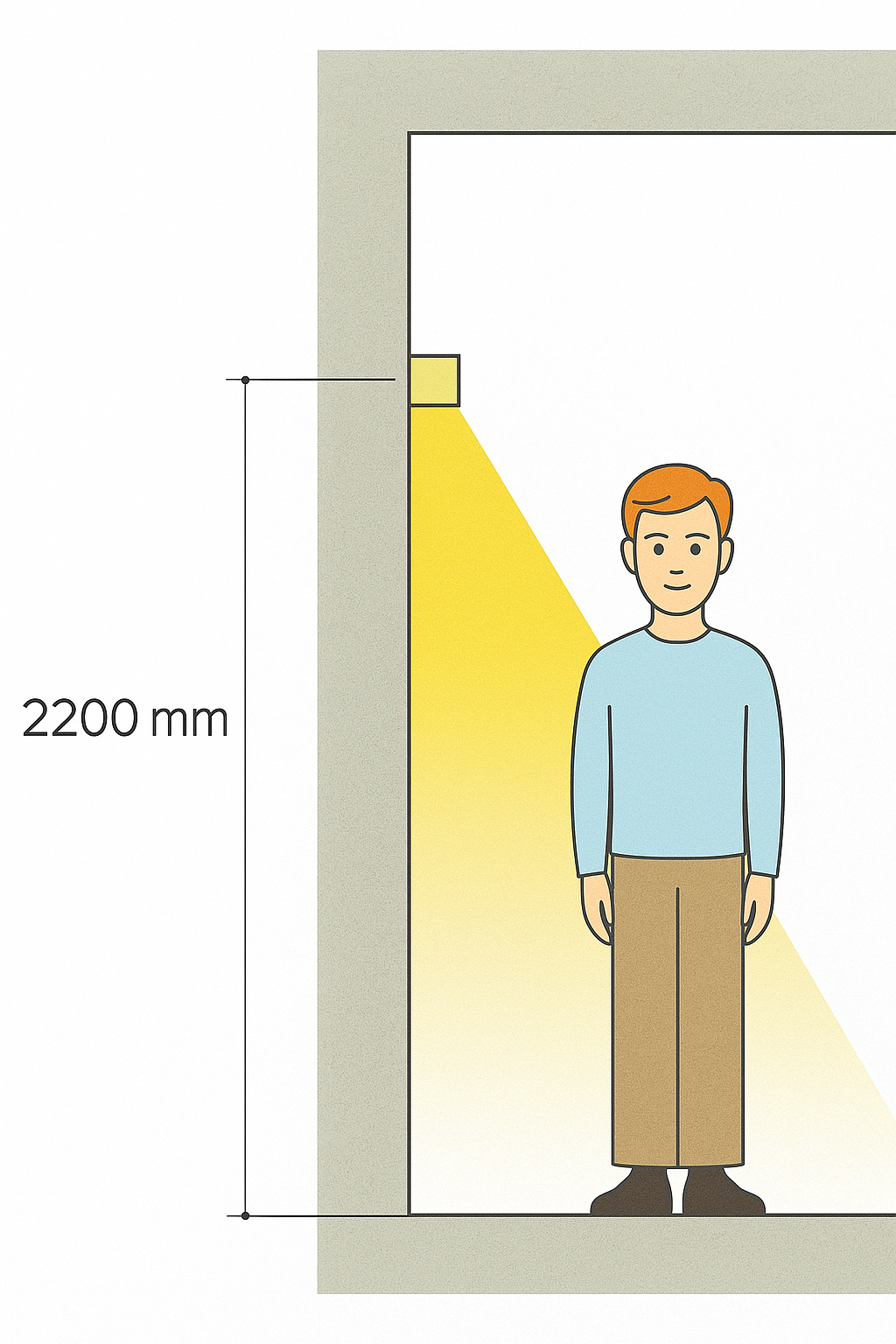
- Como regra geral, use luzes montadas na parede para a iluminação do corredor. A altura de montagem ideal é de 1.800–2.000 mm do chão, permitindo que a luz se espalhe de maneira uniforme e suave pelas paredes e pisos.
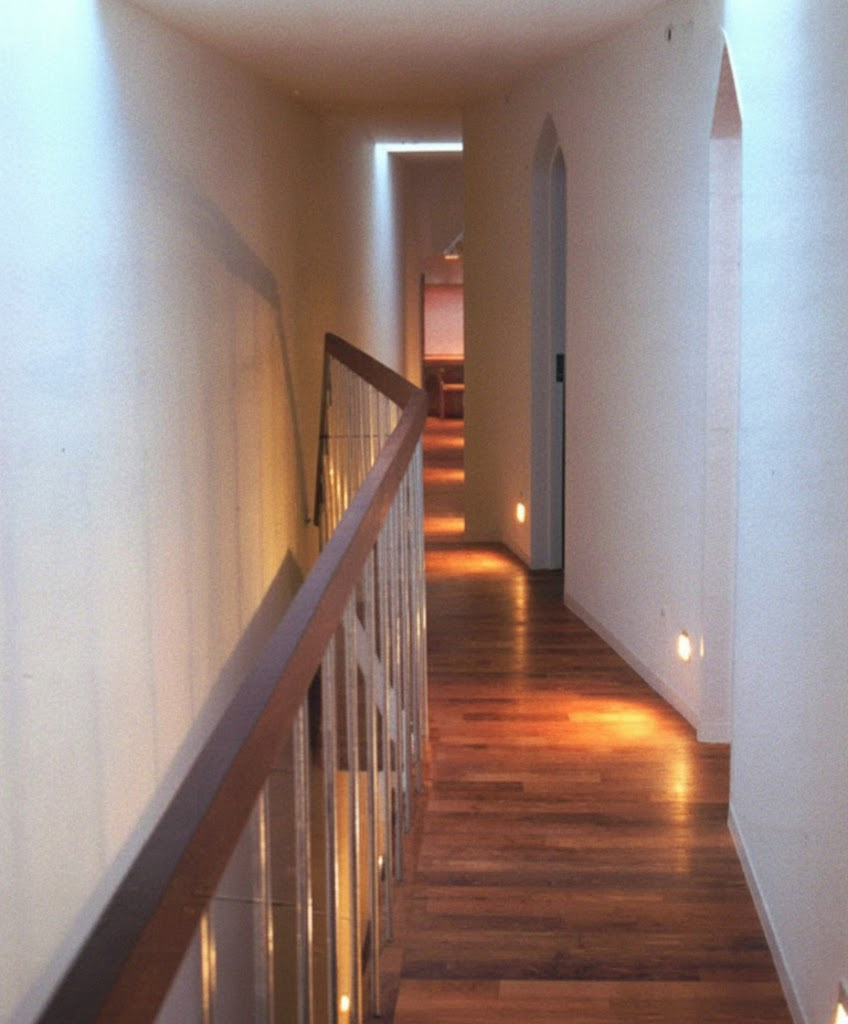
- Em corredores residenciais que levam a quartos, instale luzes de pé a cerca de 300 mm acima do chão. Isso garante que o caminho seja visível à noite sem perturbar o descanso dos outros.
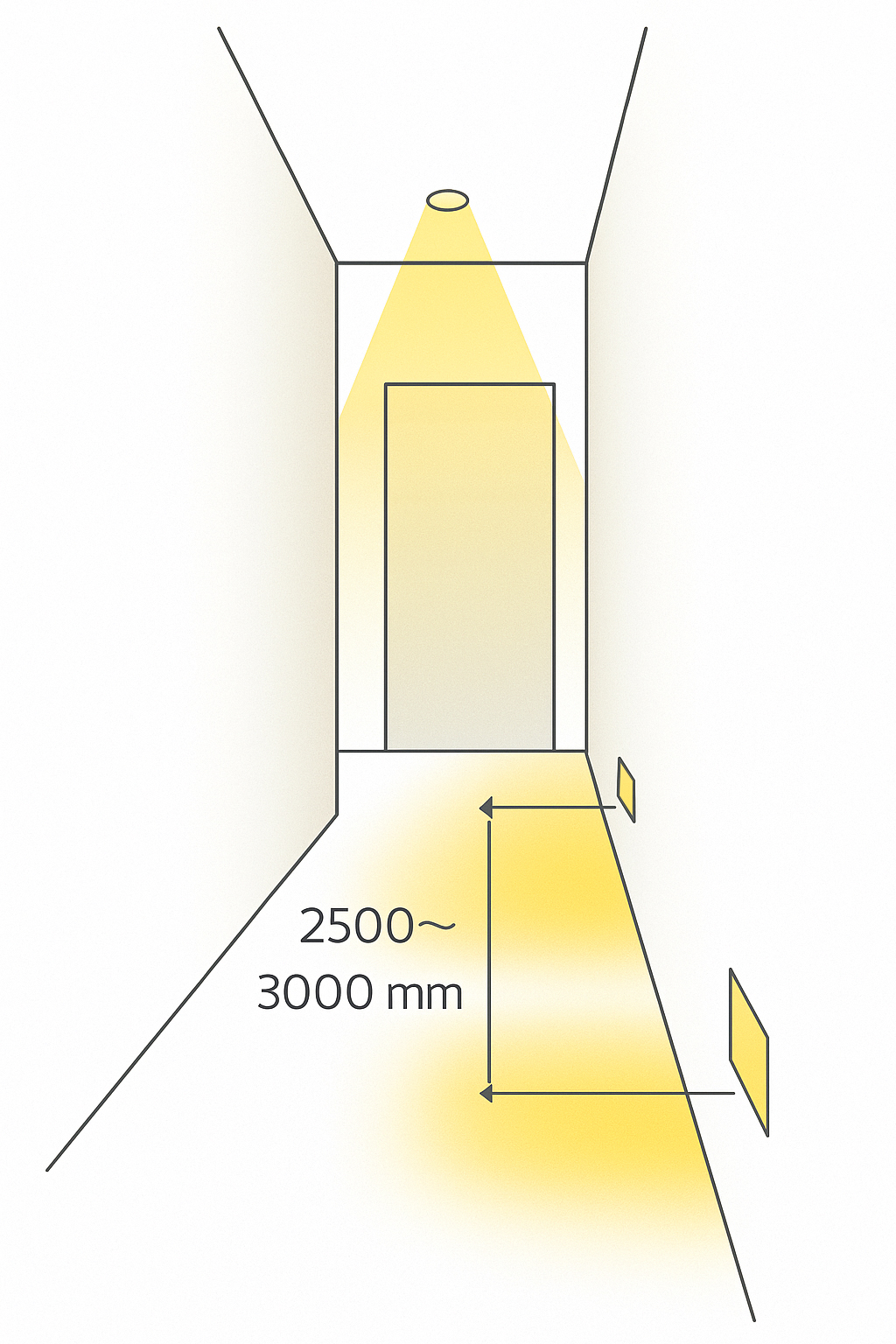
- Monte os acessórios a uma altura de aproximadamente 2.200 mm. Para espaços com tetos mais altos, isso pode ser ajustado até 2.500 mm, garantindo que o brilho seja bem distribuído. No entanto, ofuscamento e reflexão de luz desigual devem ser evitados ajustando o tipo e o ângulo do acessório.
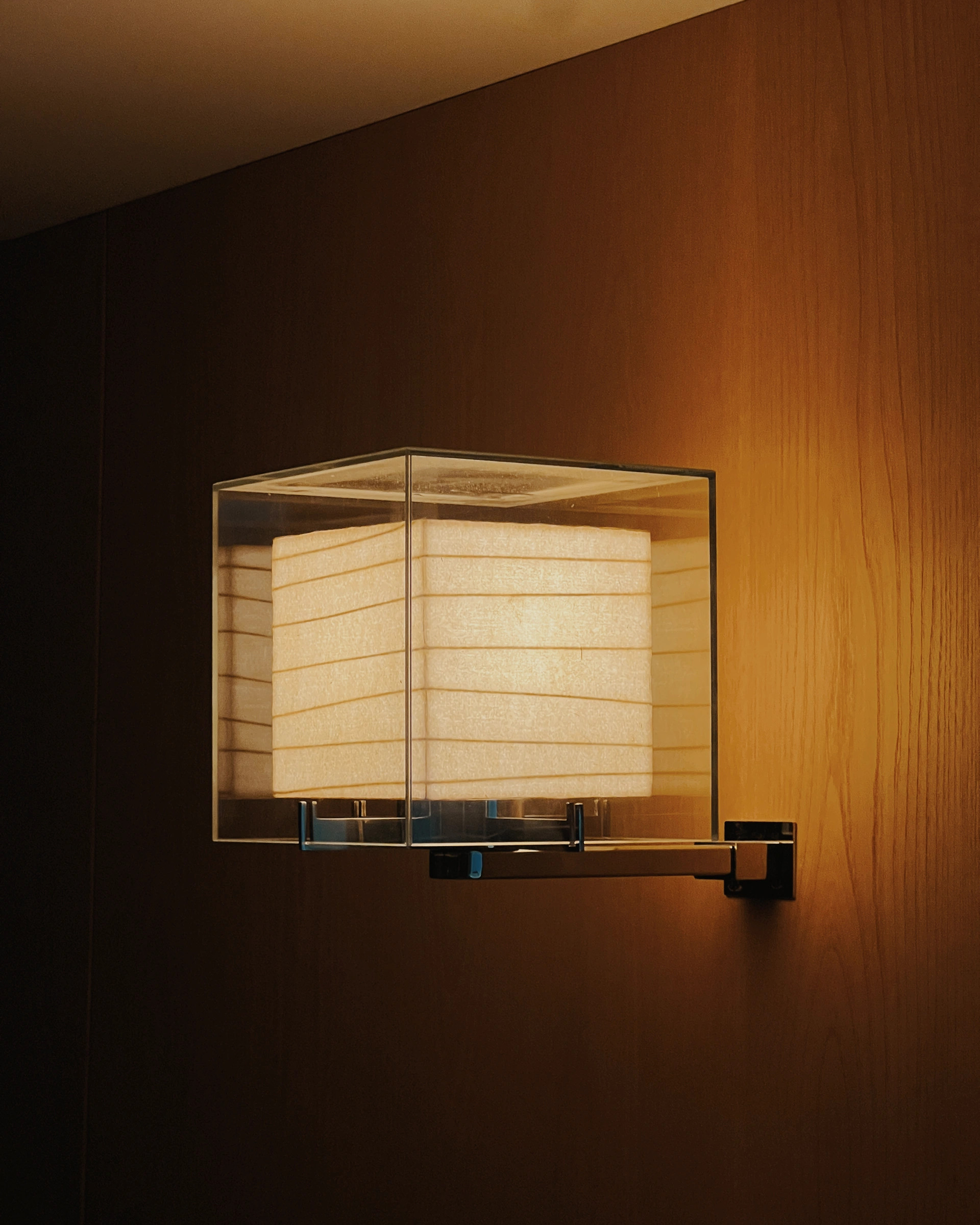
Example of Hallway Lighting
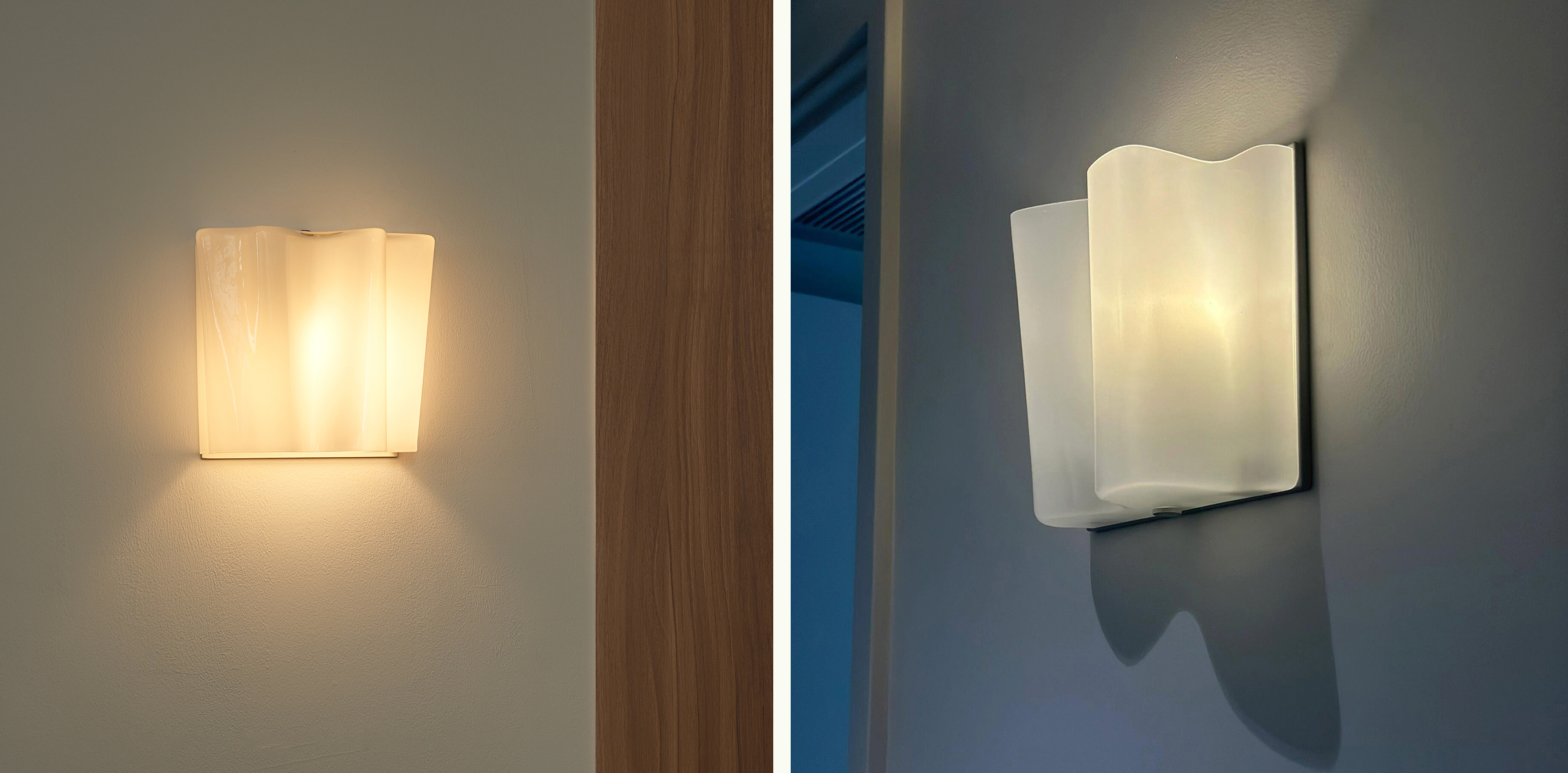
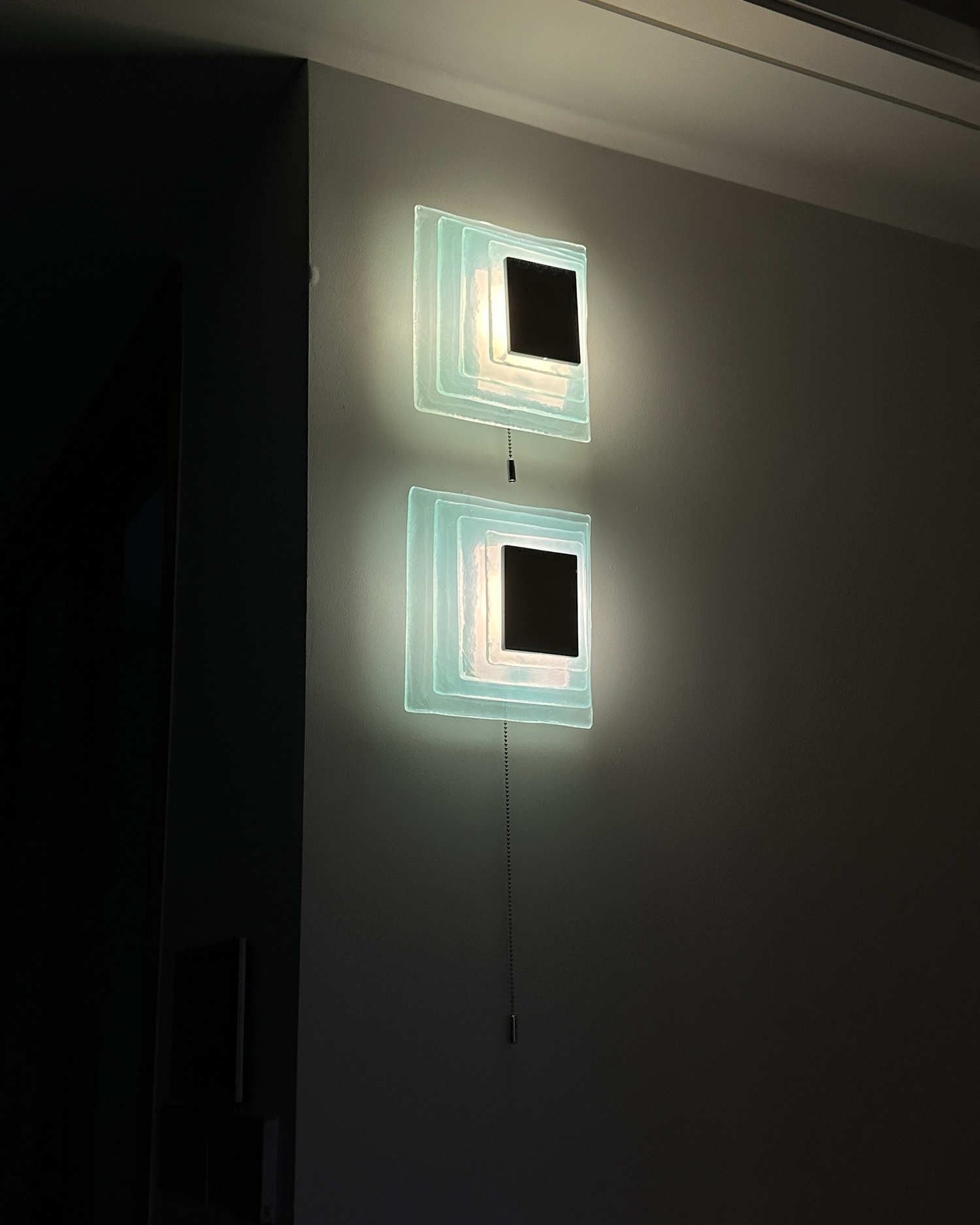
Instalar luzes de parede em posição baixa perto de cantos e portas não apenas fornece iluminação suficiente para o movimento, mas também melhora a visibilidade e a consciência espacial de todo o corredor.
Staircase Lighting Should Ensure Safety
A iluminação para escadas deve fornecer brilho suficiente para um movimento seguro tanto para cima quanto para baixo.
Ao descer, ofuscamento ou contraste súbito de brilho podem causar passos em falso. Por outro lado, a iluminação fraca aumenta o risco de quedas. Portanto, as escadas devem ser equipadas com iluminação eficaz e bem distribuída.
Materiais de piso escuros também podem obscurecer as bordas dos degraus, criando a ilusão de irregularidade. Para evitar isso, fontes de luz contínuas instaladas ao longo da parede perto dos degraus são recomendadas. Essas considerações de design devem ser integradas nas fases iniciais do planejamento arquitetônico.
Key Points in Staircase Lighting Design
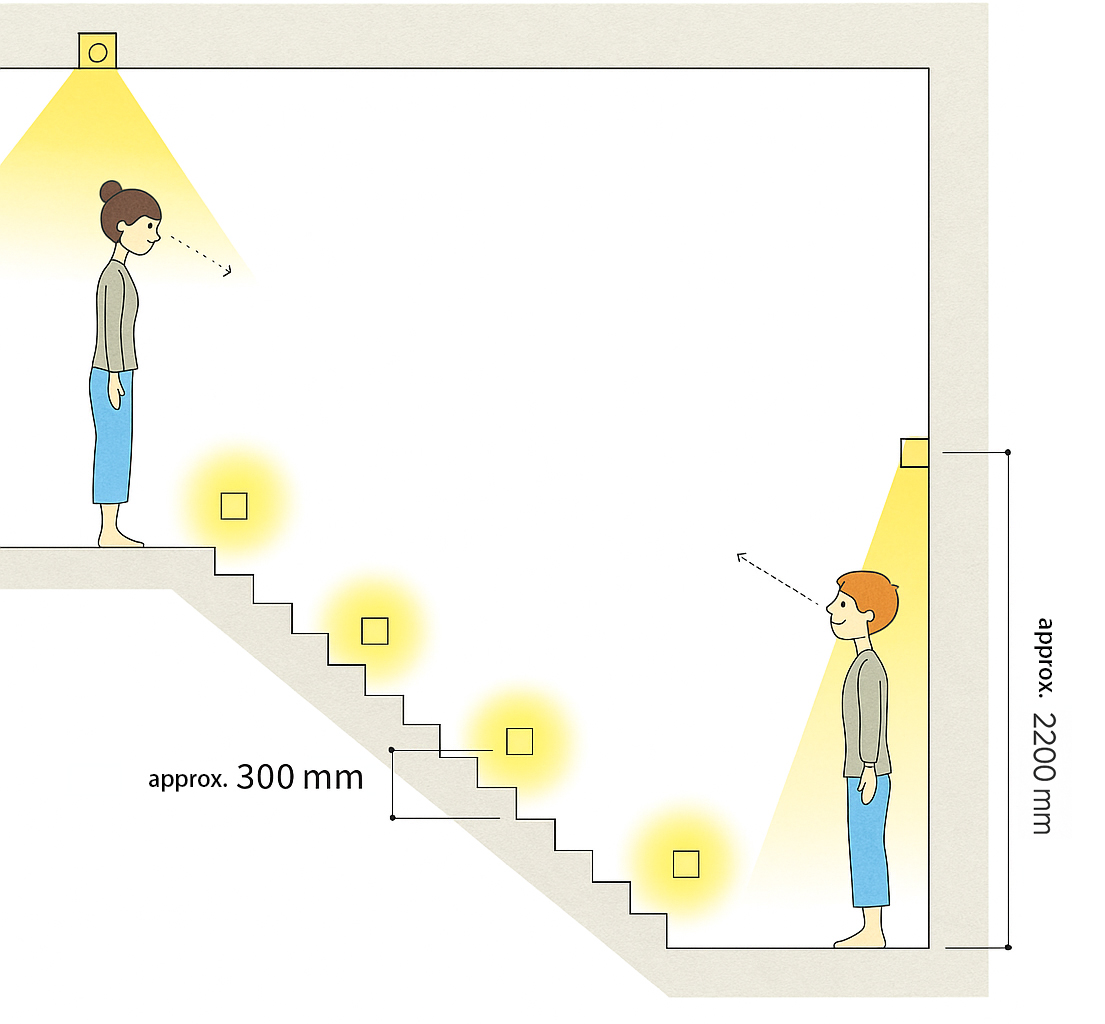
① Evite holofotes que produzem brilho excessivo ou ofuscamento, pois podem obscurecer a visibilidade dos degraus.
② Os acessórios não devem brilhar diretamente nos olhos do usuário.
③ Ao instalar iluminação para degraus, certifique-se de que o primeiro degrau esteja iluminado claramente.
④ Monte luzes de parede a cerca de 2.200 mm acima do nível do chão. Para segurança, use luzes de degrau embutidas a aproximadamente 300 mm acima de cada riser de degrau.
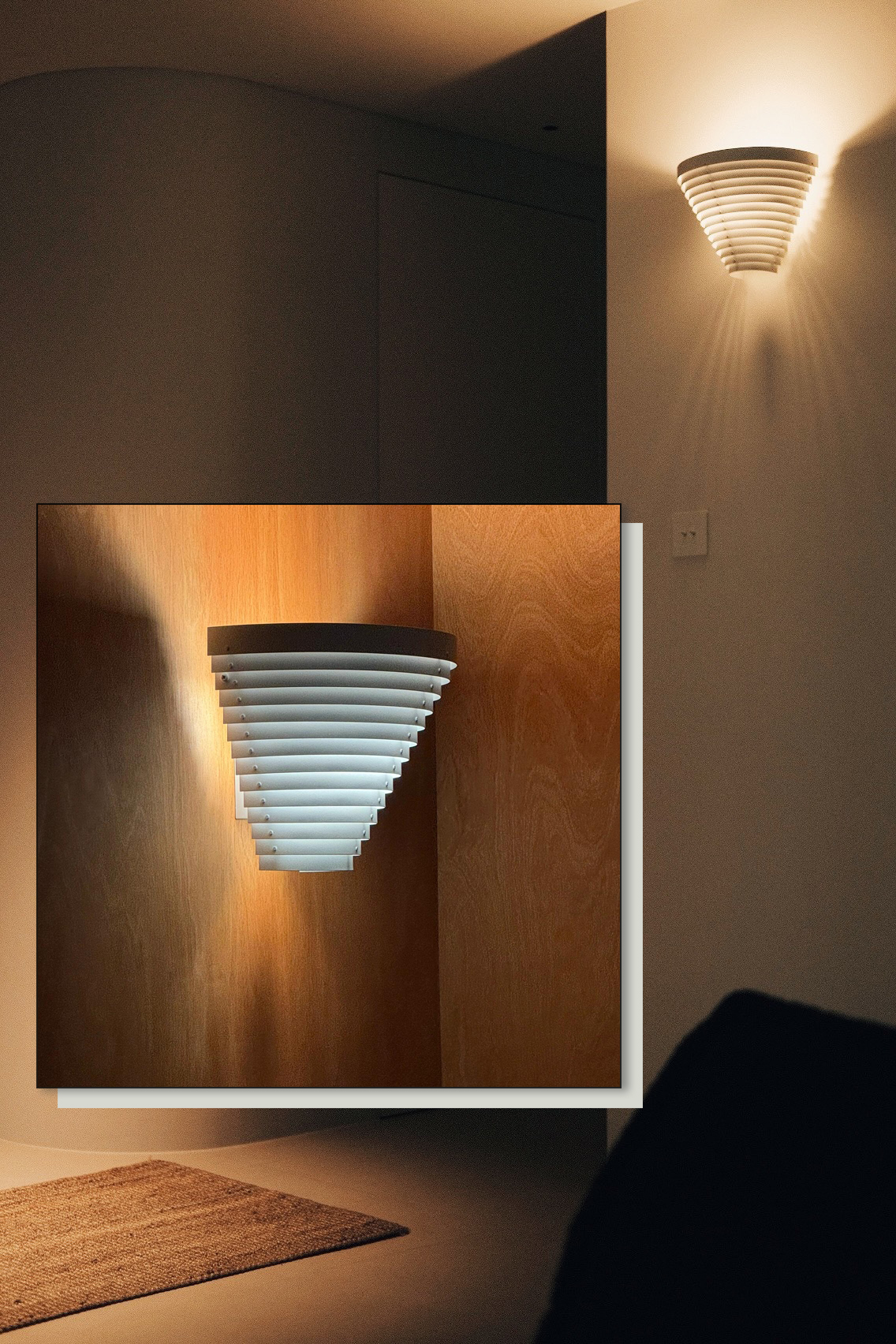
Example of Staircase Lighting
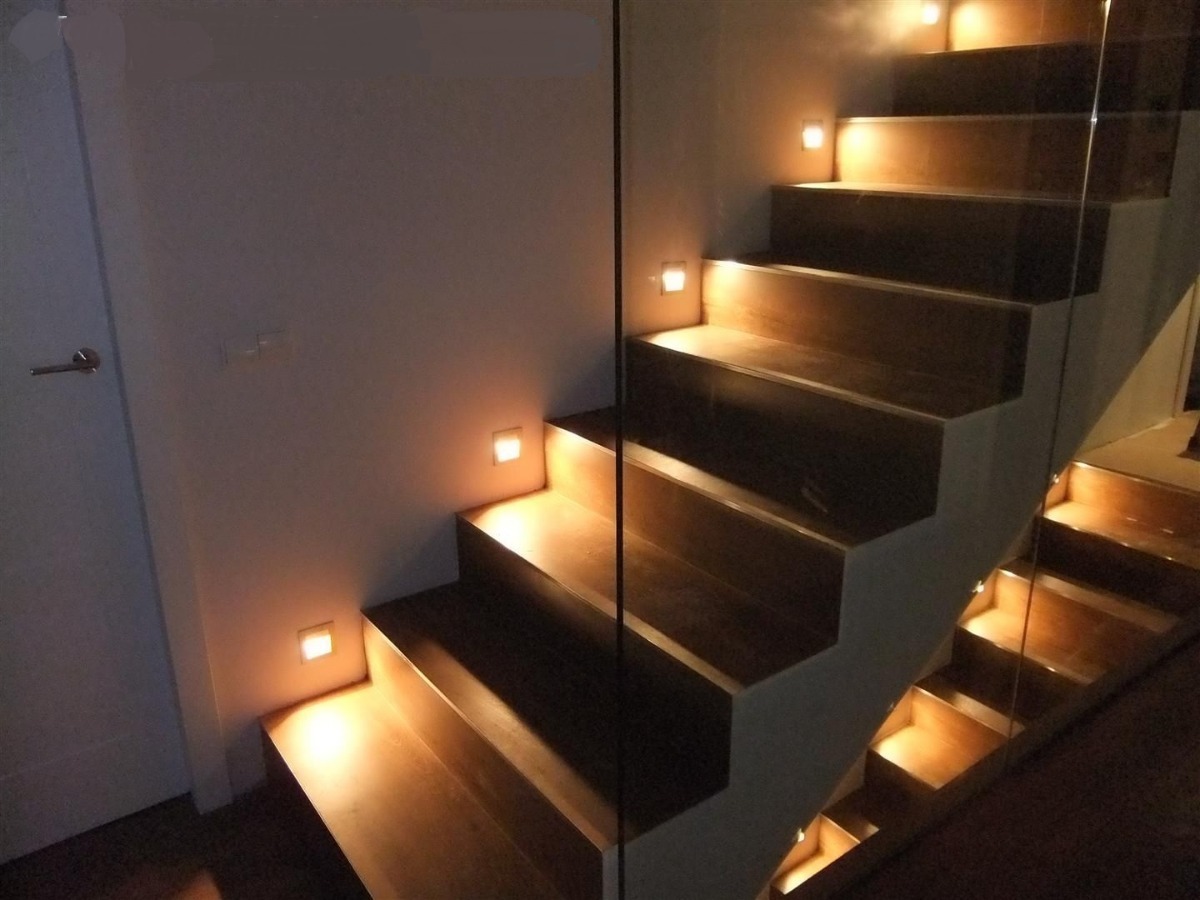
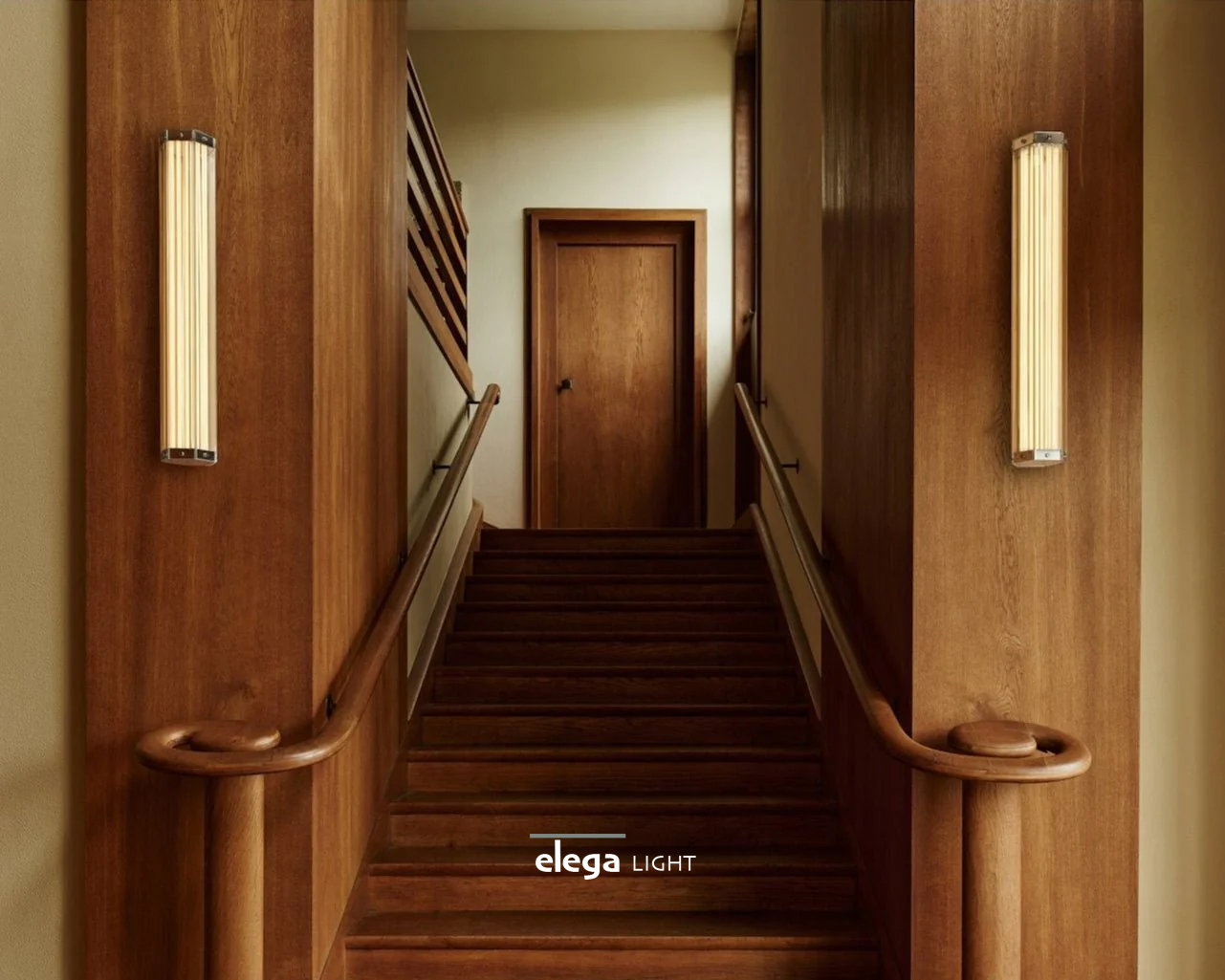
Luzes de parede montadas em baixa ou luzes de degrau embutidas instaladas continuamente ao longo da escada fornecem um brilho seguro e suave tanto para o movimento ascendente quanto descendente.
Esse design garante que a fonte de luz permaneça fora da vista direta, prevenindo ofuscamento e mantendo uma visibilidade confortável.
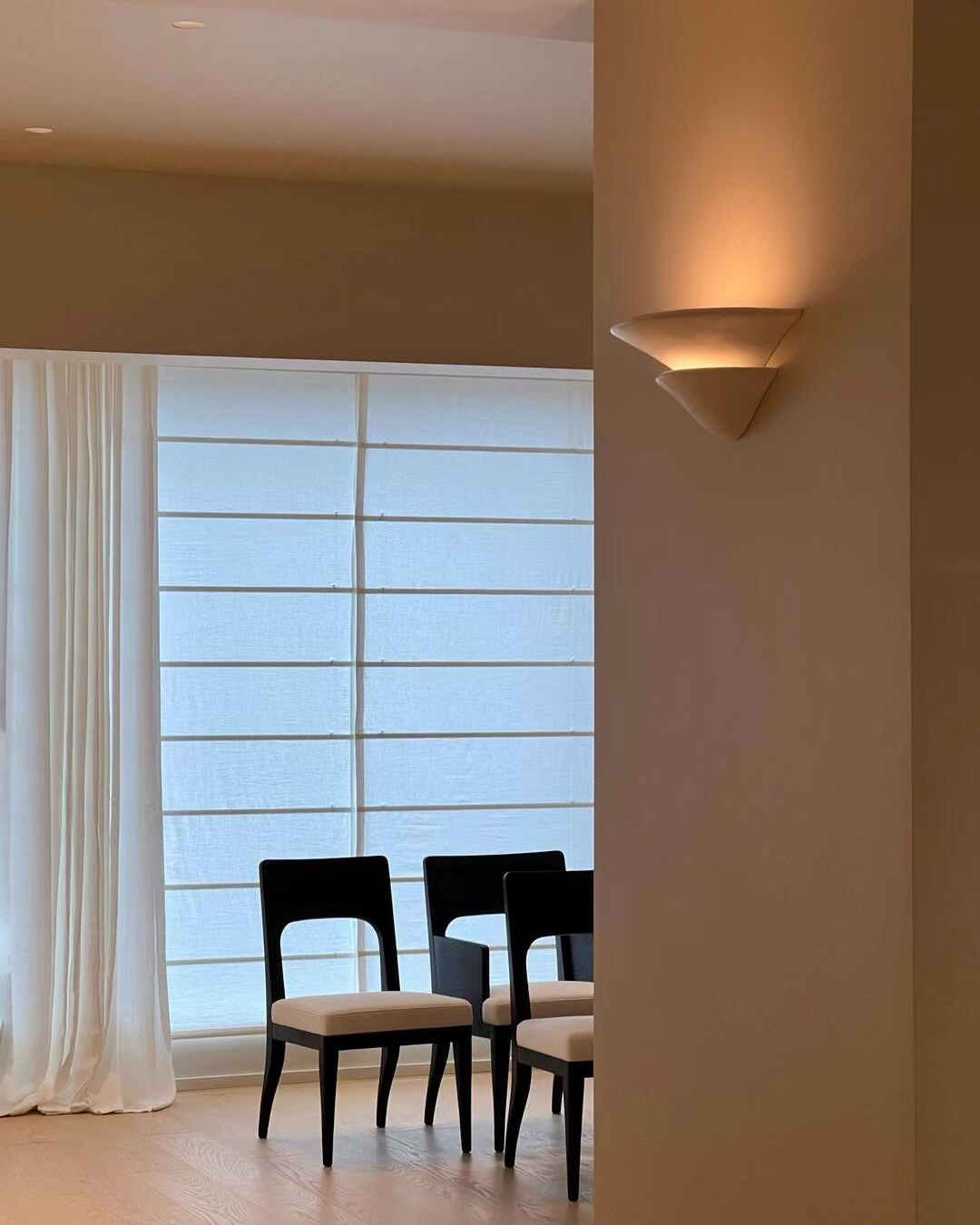
Lighting in hallways and staircases is more than just decoration, it’s an everyday necessity.
Luzes suaves e bem posicionadas mantêm cada passo seguro e confortável, enquanto adicionam uma sensação de calor e design ao lar.
Seja uma luz noturna que guia silenciosamente seu caminho ou lâmpadas de parede que iluminam cantos escuros, os acessórios certos tornam a vida mais fácil e mais bonita ao mesmo tempo.
Enviar comentário